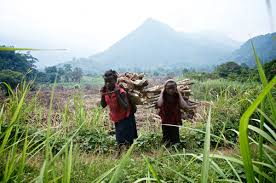
Girl child Calling: I want a Governor.

Chematia want’s a Governor, not a Politician

villge girl

Chematia wants a Governor, not a Politician-

He will be in the city for an important function he says, I be donkey pull the cart.

Fifty liters will be enough for drinking, me tired.

At least budget for the water, the donkey asks, bring not Water.


Chematia wants a Governor, not a Politician-

He  be in Limo , I be in Nduthi.

Fifty shillings will get me  Chepterit, me walk more.

At least budget for the roads, the driver asks, bring not Roads.


Chematia wants a Governor, not a Politician-

He meals  ready in 15 minutes, i  cook Maharagwe 2 hours .

Fifty bundles Kuni last a week, I be in school.

At least budget for Electricity, forest asks. Bring not Electricity.


Chematia wants a Governor, not a Politician-

He will be in Moscow for a minor surgery, I be sick in bed.

Fifty days in bed Busaruk keep me alive, me no money.

At least budget for a Hospital, child asks. Bring not Hospital.

The Cry of a village Girl.

Mshamba Abroad: Good Ole Times

Mshamba Abroad: Good Ole Times
kiMshambabroad as the name suggests, is a Middle aged man born and raised in a small village of Tulon. My actual names are Kipkosgei arap Yego, routes ko Kipsirgoin and tiondo is ‘Toret’. I did not accidentally leave out my first name but for reasons that are obvious, I am not a Hebrew nor a prophet or a son of a missionary: I am a typical villager, a Kenyan and a true African.  I went to Tulon nursery school and later joined Emsea Secondary for form 1&2, but the village is where I belong. I went back to Tulon secondary school in 2003 when it had just started. I would have actually joined Tulon University or College if there was one. This is all my 20 years, you will have to understand that at the very onset lest the journey I am going to narrate will make no sense to you. Perhaps it will relax your thinking because you already have an idea of what kind of a person you dealing with: a VILLAGER.

I will begin with early school, because there is not much to tell about my daycare, if you were born in ‘80’s in my village you will understand it better. It is all about this mysterious ‘Chelesos’ that will kill you if you don’t take your porridge…..yuck! Sifted corn flour mixed with water. Lucky were you if it was your turn to save the ‘Kenenyat’ I mean if you were a bit older. Other than ‘Chelesos’, there was also this tough lady somewhere in the village whom they would threaten to call if you didn’t finish your porridge. I did later realize it was my uncle’s wife, a very humble woman. That is all about my day care, it is now time to trek to nursery school. I was lucky here a little bit in terms of distance, it was about one kilometer, but my friend Kemei Kirwa and Kibiiy Cheruiyot had to travel approximately 4 km to get to school and back home, rainy season was another ball game. I don’t know who taught this guy Kemei how to only write lots of ‘8888888888’ in Nursery, which is all he could do in his first days of school before Teacher Cheserem rained on him terribly. What else do you remember? Who is taking who for lunch? The fun of losing your jacket, sometimes your pants and you don’t really care? This is the time you will spend 3 hours to get home for lunch and you really don’t know where you were? Did  you ever sit down in the kitchen corner, only to be told your ‘tools’ are literally out and you look at it and smile as though, you needed more ventilation?

There is not much I still remember about Nursery school, but I will give you a few hints to stir your thoughts. I will start with the importance of the soda bottle especially the one for krest and sprite, don’t think about grandma juice here ‘wirgik’, this was a snack bottle I mean the idea behind the invention of snack/lunch box. Why krest/sprite bottle? It was not transparent, it could be tightly closed with a maize cob and easily portable. That is where mum packed my tea for school, I guess this was the norm for a large percentage of families. How do you know you were a good pupil? If you never chewed on your pencil rubber, or if you never had your pencil cut into two and tied to your book bag, some hung around their neck and some on their hand. I was very terrible on this, you have a 32 page exercise book split into two and you will use the first half first. I always lost it because it was too small. To make it worse, there was this sugar bag (the khaki one), looked like a carton box material, which was the first school bags available to many. I still remember this naughty boy who use to sneak and steal our tea at vestry (My nursery school was a church), anyway I forgave him.

Primary School, yaay!  ‘Maziwa ya Nyayo’ and please do not give me the one with girls playing netball, I am a boy! I beg to sadden your face and if you are reading this, pause for a few seconds to honor my Class 1, 2 and 3 teachers, they passed away some years ago. Lower classes were the fun times in my school life, I mean the times of the song….. ‘Mieno mwalimu kululet’….’Kotab chebaibai’ or rather say ‘oronin mwalimu’, Mwalimu Chepkeikei x3(there comes the teacher). There was not much here to read or write either, it was all about colors, numbers and ‘Kiptui batooi’ (opposites), some other popular phrases included ‘oss Kotab baba’, ‘amei Some Bobat’, T.K.K etc.  It was all about break, break, break and Lunch. This is the time I could pass my home to go to my friend’s house for lunch then the next day to my parents’ house. There is this girl who ruined my fun times (and many of you), I don’t remember her exact name because everybody had a nickname by then, she told me, ‘you are my boyfriend and I will marry you’…Gosh!! Hell broke loose (it was a terrible thing to be told then), I would have beaten her up, but I was ‘Nyama ndogo’, I was very tiny, I mean the smallest kid in class. It truly reminds me why we had a private chair designed specifically for my friend and I, it was always placed in front of the class.

I beg to interrupt the flow of the narration and give you the other half of the above, as you know lower classes only ended at 12.45 pm.  I will call this doping and immune boosting enterprise, the city boys will call it poverty. If you are from the city or your grandfather was a colonial chief you were lucky, because you already knew how to say ‘eshuush…eshuush’ (excuse…excuse) me sir/madam may I go out. It seems short to write but it was very long phrase to say and majority of the class by the time they gained the courage to say so, the trouble was already down their knees. For girls I now know that it was good because Gynecologists call it Kegel exercise. Why immune boosting? It is because the latrine was an enclosed area with mabati and large stones make the floor. You can imagine how it was when full to the capacity and you didn’t have the shoes and it was raining and no roof. Sometimes if it was crowded and you know how the young Turks send strong jets to the floor (stones), the angle of depression being equal to angle of elevation everybody would get at least 3 or 5 drops in their mouth to make you strong.  Again there was this boy from a neighboring village, he use to download everything in the same place at regular intervals giving us hard time cleaning.

If you are a village boy, you understand seasons very well, there were times for chasing butterflies, catching grasshoppers and roasting them, playing soccer, running, hunting, roasting birds, castrating dogs, ‘balooowing/teching  bung’ung’wet’ (Moles)  and skinning them. There was this other one where you had to kill ‘kibiswet’, (type of a bird) and get the fat inside it and smear on a cut on your leg (doping) to make you faster. And by the way, did you ever sing in the evening a very nasty song loudly, as though no one was hearing you, sending echoes all over the village and your friend responds from a distance? It took the intervention of your mother to shut you up ‘sis koroii inyotityenchini ng’o’ (shut up you thing). Did you ever try to imitate ‘Chebakwakwa’ (the Ibis Bird) only to be told you will be deaf? Did you ever ask your dad what time it was, but you only meant I am too tired with this damn cows? Did you ever help your mom while baking/making mandazi until 12am only to be told ‘ni ya asubuhi or wageni? This were the little moments that made life worth. They are the building blocks of humanness, it might not have been similar, but all in all we have a story that makes us who we are.

How did you dance in your Ole days?


Catch up with me on my next episode…Class 4-8

Quotes.

Quotes

“There is only poverty where essential needs are not met, and it is not being poor to lack a type of wealth which one as not acquired a need, and which one does not even know” Abbe’ de Condillac

“Man proud man, /drest in a little brief authority/….plays such fantastic tricks before heaven/as make the angels weep” Shakespeare

“Men must be taught as if you taught them not, and things unknown proposed as things forgot” Pope Alexander.


“All causes of action are risks, so prudence is not in avoiding dangers but calculating risks and acting decisively. Making mistakes of ambitions and mistakes of sloths” Nicollo Machiavelli


“Parents wonder why streams are bitter, when they themselves have poisoned the fountain” John Locke


“It is too dangerous to be right in matters on which established authorities are wrong” Voltaire.


“Optimism is the madness of insisting that all is well when we are miserable” Voltaire


“When dealing with people, remember you are not dealing with creatures of logic, but creatures of emotion” Dale Carnegie


“Religion is no longer free but cheap” A.W.Tozier


“It is better to be sometimes right than always wrong, so soon as I discover my opinion to be erroneous, I shall be ready to renounce them” A. Lincoln


“The idea of progress comes naturally into each man’s mind: the desire to rise swells in every heart at once, and all men want to quit their former social position. Ambition becomes a universal feeling” Alexis de Tocqueville.


“Four men and thousand others………….were not searching for a mythical pot of gold at edge of the Western rainbow, but for a place where their dreams and efforts would curve them a place in a fast –changing society. A. Lincoln


“Hell is empty and all the devils are here” Shakespeare


“God has given you a face, go make yourself another” Shakespeare


“Be kind, for everyone you meet is fighting a harder battle” Plato.


“We can easily forgive a child who is afraid of dark, real tragedy of life is when men are afraid of the light” Plato.


“Before you embarked on a journey of revenge, dig two graves” Confucius


“The price good men pay for indifference to public affairs is to be ruled by evil men” Plato


“Above all, mankind, would discover, beneath the clash of ideology, some minimum standards of trust rooted in the fact that we are all men, that we all stand under the judgement of history and that we all love and seek to live and know that we must die” Barbara Ward


“ It is simply a fact of human nature that you do not get what you do not want, and you do not work for what you cannot imagine” Barbara Ward


Robert Burns Epitaph!

“The poor inhabitant below

Was quick to learn and wise to know,

And keenly felt the friendly glow,

And softer flame,

But thoughtless follies laid him low,

And stained his name”


The King of Coaching: John Chumo a.k.a Kiara

Video courtesy of KTN news reporting.

The King of Coaching: John Chumo a.k.a Kiara

In the inner  ‘city’ of Kapsabet in Nandi County lives a man John Chumo a.k.a KIARA. In his heart, overflows the humility and dedication for a job- he will never be paid- no one will afford. In his own hands, he has built a bridge for many to try the route adventure in the Western world. The man you will always find at Kipchoge stadium, if you don’t find him at the stadium, just wait for about an hour and I am certain he will show up with a crew of athletes. The man with a humble touch and a down to earth approach to problems. He is truly endowed with relentless courage, vision, ability, and sense of humor. Tell him you’re a new athlete and you won’t have to introduce yourself further, perhaps he will get you started with a few workouts. You do not need more to be an athlete, all you require is a little bit of Kiara sense and the rest will be history. I had to capture this brief description because the narration I am going to outline might leave you with unnecessary doubts. The reason I am writing this story is to uncover those moments we quickly forget and move on as though no one gave you a hand along this journey called life.

I wasn’t a good athlete, to begin with, but I was not the worst kind, I mean the kind that really doesn’t know how many laps is 400m.  I did show up on the field on the first day with a few things that looked like track uniforms and I was welcomed to a group commonly known as the Student runners. Nobody asked me any questions, all we were told were a few instructions from Coach Chumo. He was very brief and as clear as possible. “Today we are going for one hour and thirty minutes, the route is Chemai-Kortini, easy pace”. I might have told you Kiara had a strong sense of humor, what I failed to inform you is how he used humor to correct athletes without hurting their feelings. Here is his favorite one…… ‘Wewe unafanya matusi sio press- ups’, a funny way of saying you’re doing press-ups incorrectly. Days go by, and now you begin to understand distance in terms of running, the different workouts i.e. intervals, fartlek, diagonals, hill work, long runs, etc. and how it relates to your athletics performance.

As I unmask the untold past of John Chumo, just keep in mind that he was not an ordinary Coach, the one that scavenges on already groomed athletes, a common practice in Kapsabet. All he needed was a dream and passion and he will validate. Many would have seen him as a mere joker or idler, but I will ask you to show me any man in the entire rift who has referred more students abroad than Kiara. In simple Kiara is worth millions of Dollars, you will ask where and I will tell he paid school fees for many students. How then did he master this art? He had this extraordinary ability to locate ‘ability’ and nurture capabilities on every individual that showed up for running. He was also able to separate boys from men and mentor the starters as isolated cases. With over 18 years of experience, Kiara also had an acute sense of sight which could locate injured athletes and treat them where possible with his not-so-merciful massage or by allowing them to run on the grass (soft ground).

As the practice became a norm, we no longer felt too tired from the day’s workout. The other side of young adult life begun, roaming the streets of Kapsabet town buying nothing or chasing boys/girls. Thank God you didn’t see Kiara, but he had already spotted you, how? Is a question you will ask him. You thought you had escaped the hands of your domesticating parents, but you have landed in the hands of a no-nonsense coach/parent. The following day at practice, he would fully describe how and where you were followed by warnings. Secondly, he would humiliate you in front of everybody (after all he has nothing to lose). Once beaten twice shy, but if you fall again in is hands at the wrong place, he would notify your parents. Why all these? Kiara was the kind of the few rare personalities that treat humanity with dignity and respect.

As I conclude, I would like to spill a few beans, although it might be a shame to many, the truth be said and credit be accorded where it deserves. Kiara, when you said it is not easy to keep a scholarship it was true, many forbade your words and they lost it, they cried to the angels of the past but it was too late. Kiara, when you said many will be scared to return home for failure to make it in States, it was true: many are holding on to a future that has already passed. Kiara, you touched every household in entire Kenya, if I had the power to move a few mountains, I would have given you the highest position of Coaching in the land, but you are one in my Heart. Kiara you the HERO of the Source of Champions.

From East Africa to USA: Mystery of the first flight.

From East Africa to USA: Mystery of the first flight.
KA.Dos and don’ts.
  • On your first flight remember the magic word Ask! Ask! Ask! The secret to getting to your destination safely and on time is to ask. If you are from the village, everything from the beginning will look like you are watching movie or you are dreaming. I am sure you will be thinking like me then: waiting to board a plane in an open field and imagining how I will wave at my family as i climb the ladder, just like how Moi used to do. It won’t happen just follow the group and you will find yourself in the plane.

N/B Remember to stop by the forex to convert your money into the currency of your destination or at least into dollars because it will be accepted everywhere. Forget about the shilling it won’t sell, just like a toothless cow in the market you will stay with it ‘mpaka’ return date.

  • If you can’t read well your boarding pass ask (I mean those pieces of papers you get last at airport), this is where you will get to see your seat number, arrival time and destination. You have a lot to worry about on the way, save your brain and ask things you don’t know from the pretty lady in Uniform.
  • There will be a Bunch of instructions to follow, pay attention to the Pilot and the safety demonstration (its normal procedure, don’t get scared). Please ask somebody if you are seated on exit door. Get off that chair and ask to sit somewhere else, you’re too much to help someone now. If you can locate someone you know on same flight ask the hostess if you can sit with her/him….someone you know at this point is anybody from your home country. Two is better than one.
  • Now you’re seated, do not worry about the plane as it takes off it is very safe. It is now time to trust your ears and you broken English to save your tummy. I have no problem if you boarded your home flight because the menu will sound familiar although some attendants might attempt to twang a little bit. Do not miss a meal even if you are a picky eater, just ask and ask and ask. There are strange things that might throw you off .i.e. Chicken noodles is not chicken, don’t go with the first part of the sentence listen fully.
  • They will ask you if you need something to drink. It’s easy to make up one, just take any fruit and add the word ‘juice’ to it and you will have one. For instance, apple juice, mango juice, orange juice etc. You might consider tea, I meant regular tea not this other green stuff. They will bring you a cup of water with dissolving tea bag in it. It comes with 2 sachets written sugar (ask for about 10 of those) and another tiny packet, bring it closer to your eye and you will see somewhere written milk, please don’t drink it, it is for your tea. Open the milk packet by peeling the top lid (do something to get your milk into the cup). Tear the sugar sachets and pour into the cup. Do not attempt to mix with your hand or by shaking, there is another tiny stick or straw that come with it ‘koroga nayo’
  • Adhere to the call of nature, you are free to use the bathroom/restroom/toilet. Do not hold on to this luggage because it is not good for your kidneys. It might seem complicated to operate the toilet, but I know you will figure out. Do not think deep about where it will go it is not your business.
  • If you are from Nairobi, you will probably be connecting your flight somewhere in Europe, if you are in doubt ask, sometimes you will be in country that uses a different language, show them your pass and many will be willing to help, If not, try the hard way, put away the pass that you’ve used and have the one you need at hand, try to read carefully in order to find the Gate number. Be calm and begin searching for the right gate and make sure you confirm before you sit down to wait for your next flight. N/B To Gate B is different from Gate B. TO GATE B means you are still some distance away, probably you have to catch a train or a bus, take a lift, take the stairs or you have to walk. GATE B means you’re on the right spot
  • And the circle begins again.

A.O.B

  • If you are headed to USA, confirm the weather or season, do not show up at Norfolk airport (May-August) armed to teeth with 3 layers of new vest, shirt and heavy jacket ,that is good for Late October until May.
  • If you are a man (Mwanaume) stay away from ‘PINK’ stuff and don’t ask me why.
  •  Catch up with me next weekend for: USA 101.

The Shepherd that eats the sheep.

The shepherd that eats the sheep.

The struggles in the ‘UNIQUE’ Tanzania,   What seemed to have happen.

Writing: The best democracy money can buy by Greg Palast.

http://www.skeptically.org/wto/id2.html

How the IMF Cured AIDS

The IMF and its sidekick, the World Bank, have lent a sticky helping hand to scores of nations. Take Tanzania. Today, in that African state, 1.3 million people are getting ready to die of AIDS. The IMF and World Bank have come to the rescue with a brilliant neo-liberal solution: require Tanzania to charge for what were pre­viously free hospital appointments. Since the Bank imposed this requirement, the number of patients treated in Dar es Salaam’s three big public hospitals has dropped by 53 percent. The Bank’s cure is working!

The IMF World Bank helpers also ordered Tanzania to charge fees for school attendance, then expressed surprise that school en­rollment dropped from 80 percent to 66 percent.

Altogether the Bank and IMF had 157 helpful suggestions for Tanzania. In April 2000, the Tanzanian government secretly agreed to adopt them all. It was sign or starve. No developing na­tion can borrow hard currency from any commercial bank without IMF blessing (except China, whose output grows at 5 percent per year by studiously following the reverse of IMF policies).

The IMF and World Bank have effectively controlled Tanza­nia’s economy since 1985. Admittedly, when they took charge they found a socialist nation mired in poverty, disease and debt. The IMF’s love-the-market experts wasted no time in cutting trade barriers, limiting government subsidies and selling off state indus­tries. The World Bank’s shadow governors worked wonders. Ac­cording to World Bank watcher Nancy Alexander of Citizens’ Network on Essential Services (Maryland), in just fifteen years Tanzania’s GDP dropped from $309 to $210 per capita, literacy fell and the rate of abject poverty jumped to 51 percent of the popula­tion. Yet, the World Bank did not understand why it failed to win the hearts and minds of Tanzanians for its free market game plan. In June 2000, the Bank reported in frustration, “One legacy of so­cialism is that most people continue to believe the State has a fun­damental role in promoting development and providing social services.”Greg Palast